
Recovery · Compression boots
Second Wind Recovery Boots
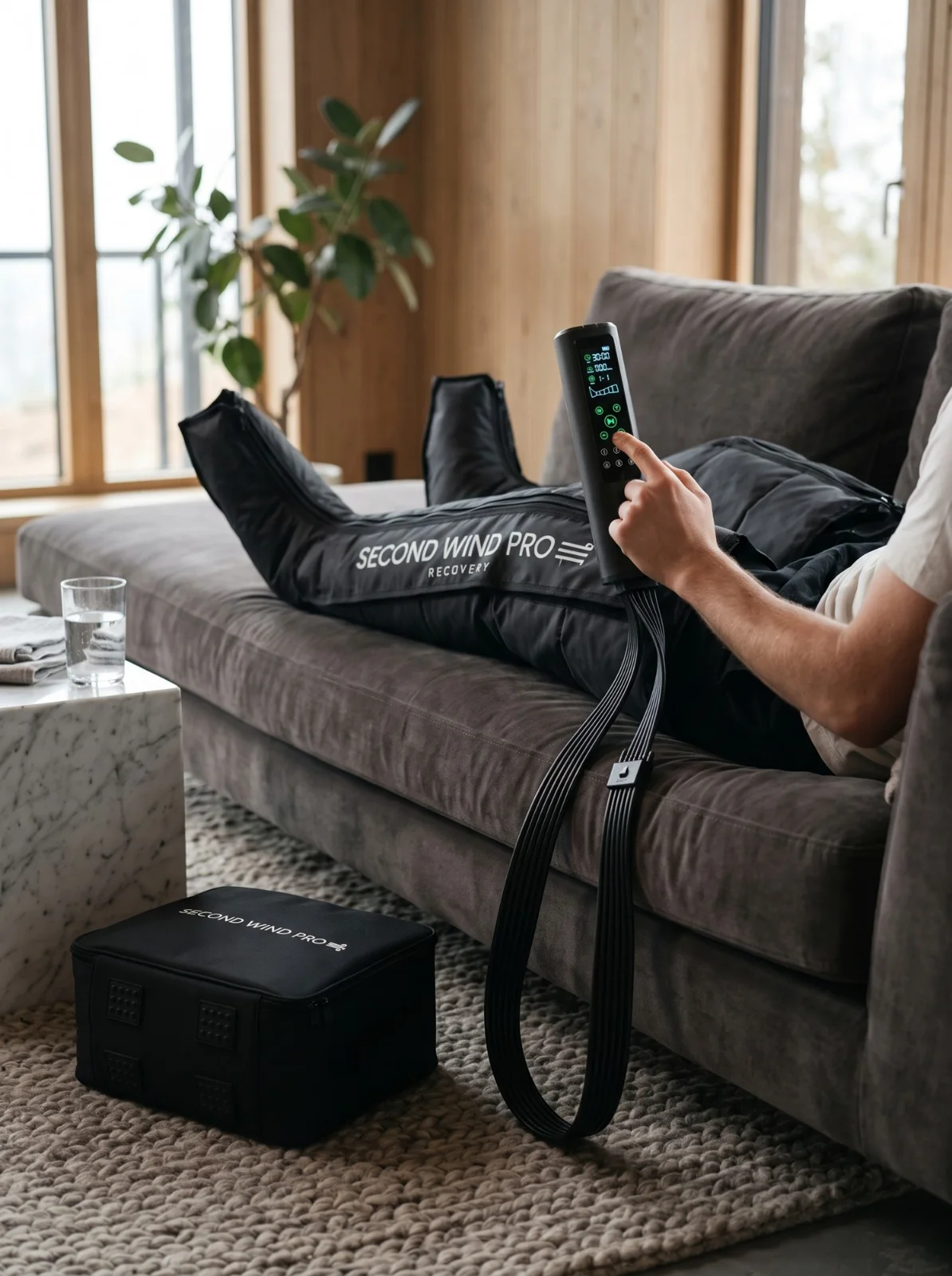
Professional compression leg boots, made accessible. Six chambers, foot to thigh, with a cordless controller.
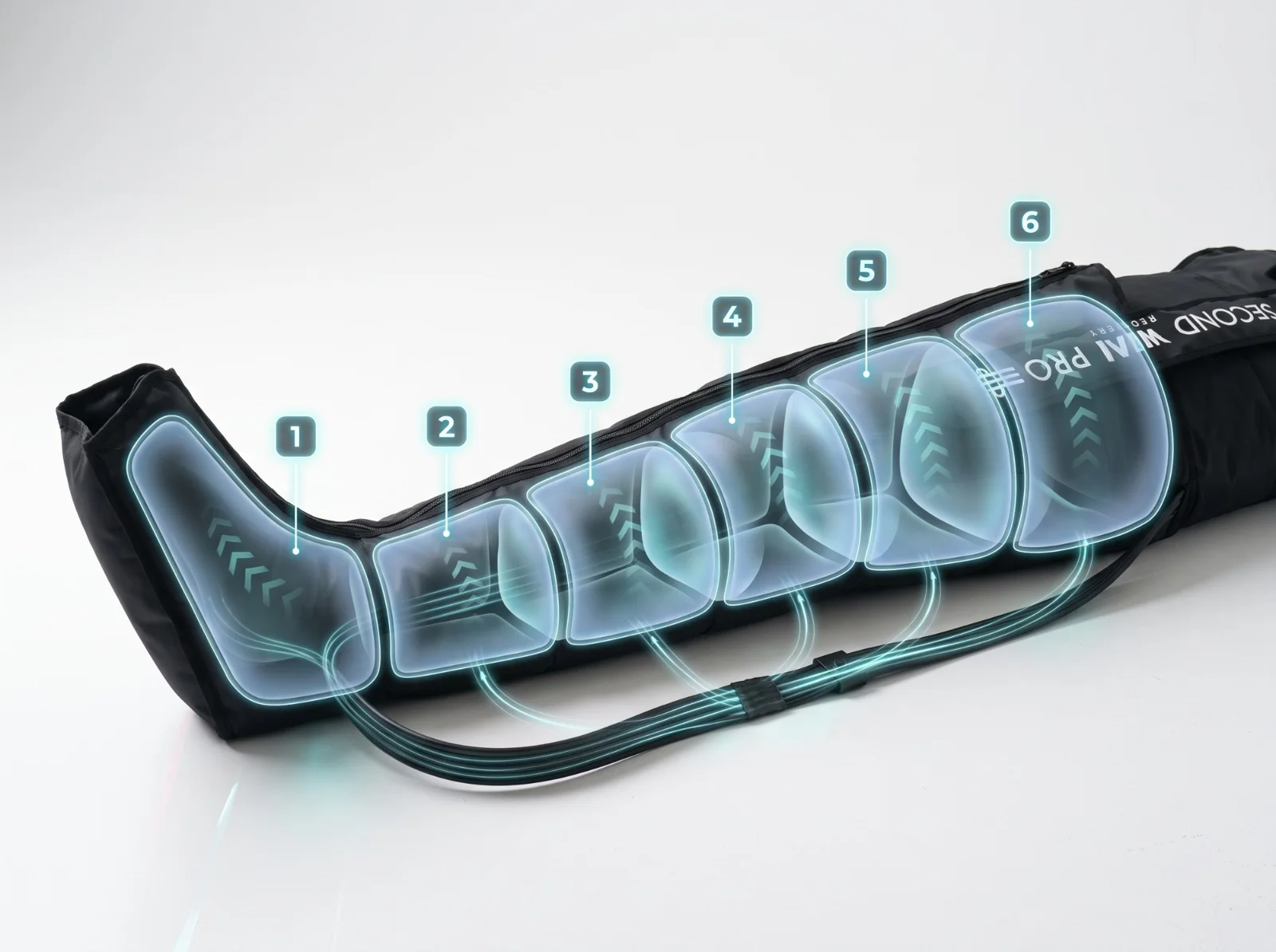
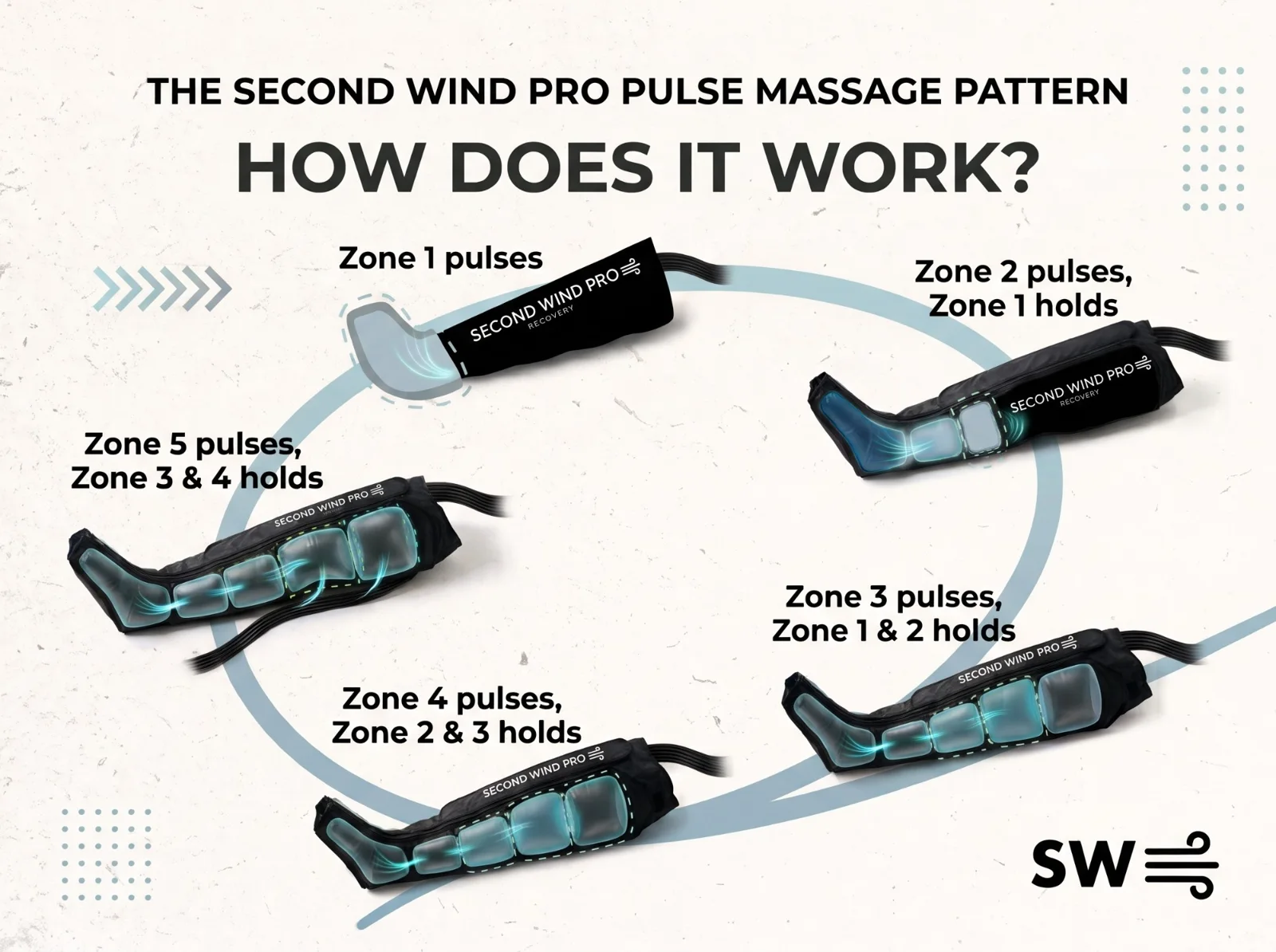
- Six air chambers per boot, squeezing in waves from the foot up to the thigh.
- 60–270 mmHg pressure and 12 programs, set on the controller. No app.
- 15–60 minute sessions, as often as you like.
- Cordless. A built-in 3,200 mAh battery, so no cord to the wall.
Add to your set
Recovery that fits your day
Built for every day, not just game day.
The details that matter
Small details.
Big difference.
Foot to thigh
Six chambers per boot work from the foot through the calf, knee and thigh, at up to 270 mmHg. Start low and find a pressure that feels firm but comfortable.
Set it, then lie back
Twelve programs, pressure up or down with + and −, and a timer from 15 to 60 minutes. Press start and switch off.
Anywhere you can sit
A built-in battery means no cord to the wall. On the couch, in bed, at the court. Pack it all into the carry bag and take it with you.
How compression leg boots work
Six chambers. One steady squeeze.
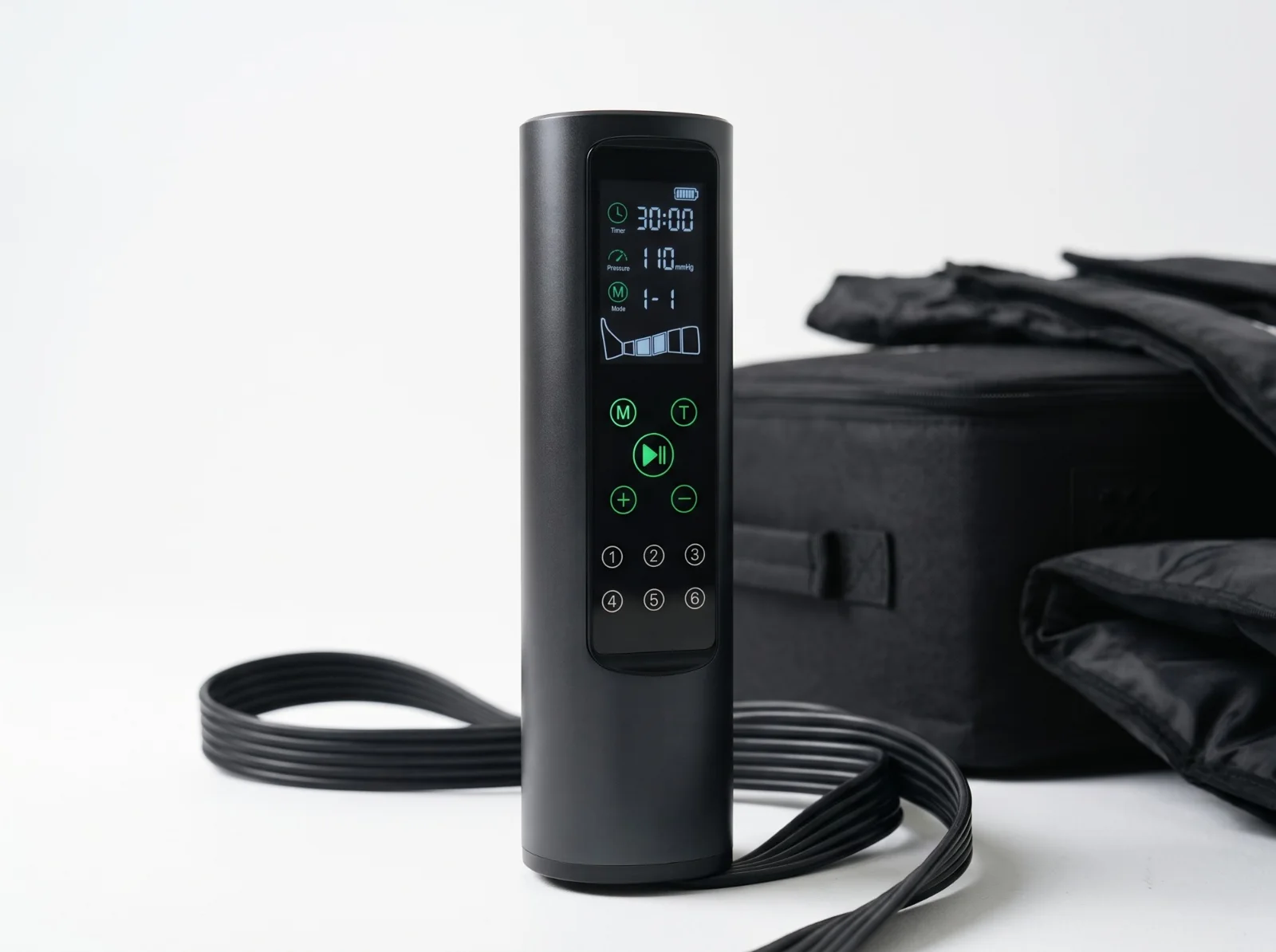
The controller
Every setting, in one hand.
A small cordless unit with a clear screen showing time left, pressure and program. Each button does one thing.
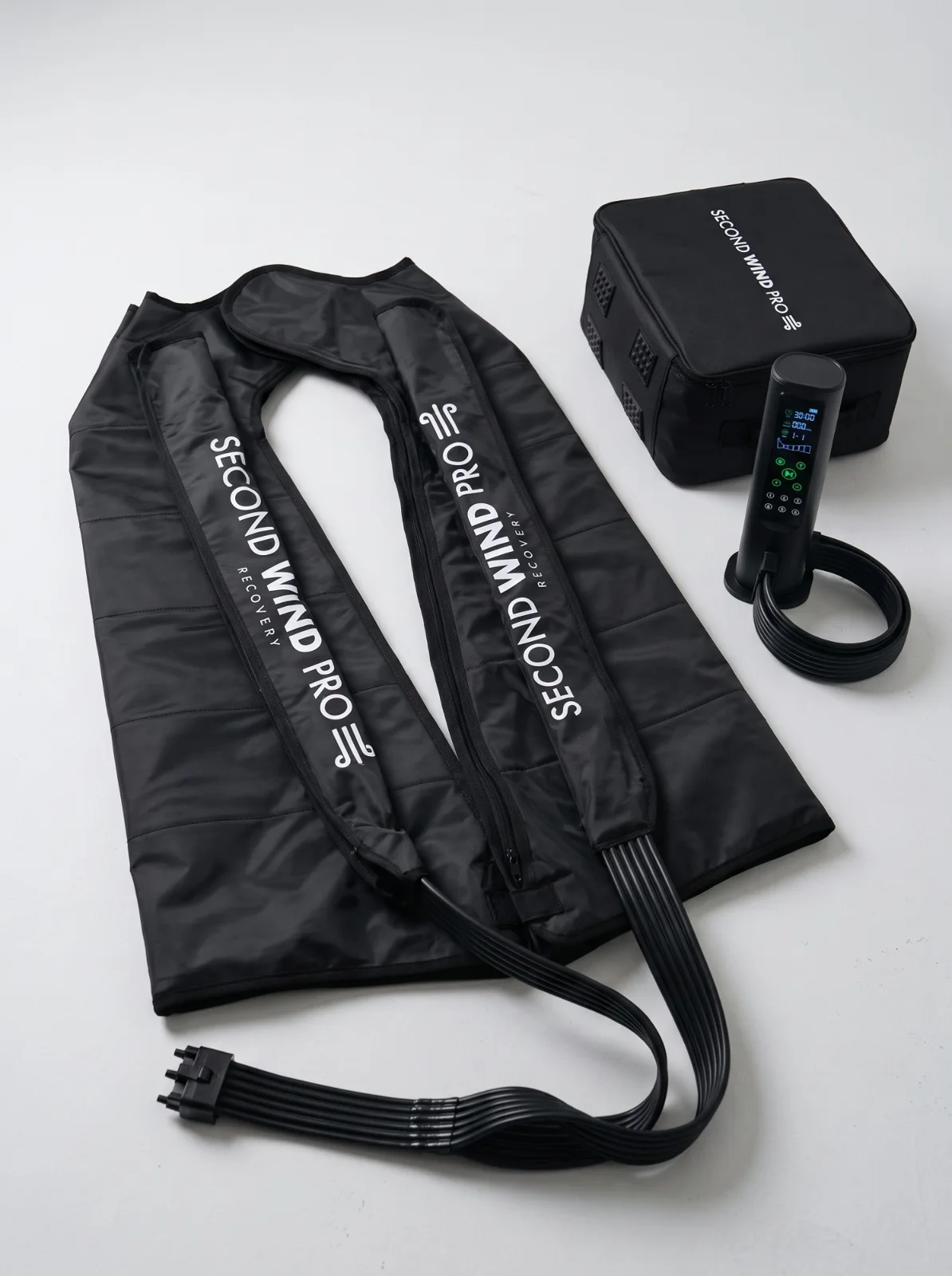
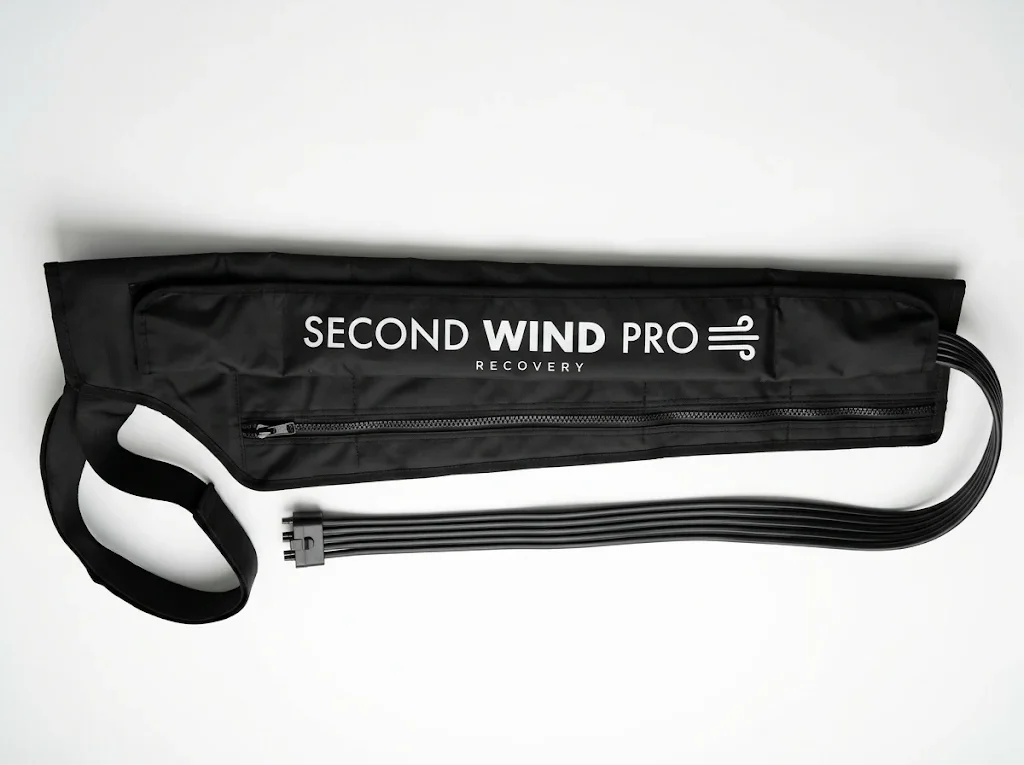
Add-on · Arm sleeve
The same squeeze, wrist to shoulder.
A full-length sleeve for one arm, with a strap across the shoulder that keeps it in place. It plugs into the same controller as your boots, so you swap between legs and arm in seconds.
What 15–60 minutes does
Lighter legs, every day.
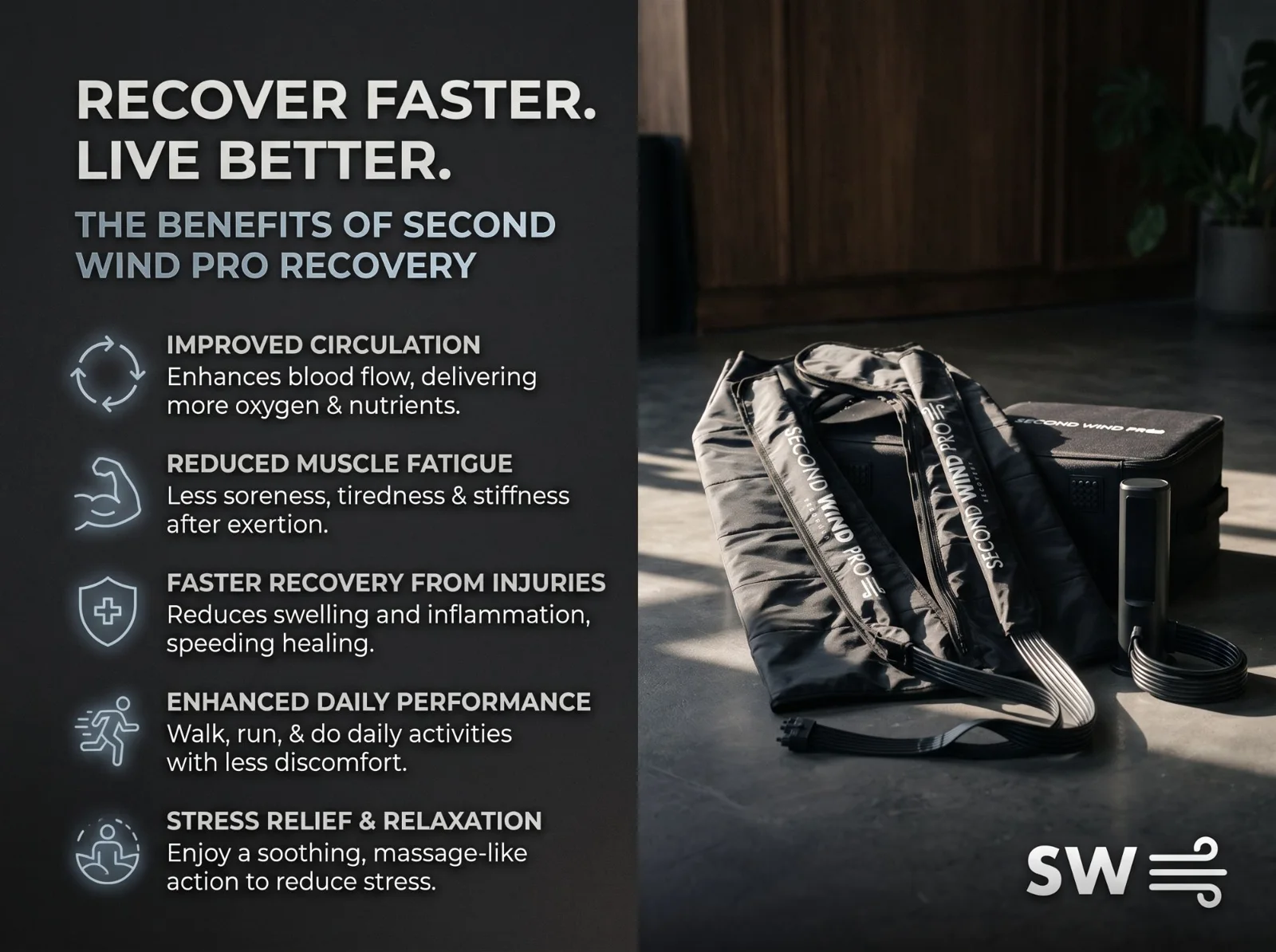
Ready when you are
Everything in the box.
Carry bag and arm sleeve are add-ons.
The pros never skip recovery
The world's best use compression boots.
Used by Cristiano Ronaldo, Ben Johns, LeBron James, Naomi Osaka and Kevin Durant.*
“I started using it, my legs started feeling better and I didn't stop.”
“…it has become a non-negotiable for me following a round.”
*Publicly reported users of air compression boots from various brands. Quotes are about compression boots in general. These athletes are not affiliated with and do not endorse Second Wind.
The Recovery Reviews.
Real athletes, in the boots, in Cebu. Our first reviews land in December.
Legs before — / 10
After 15 minutes — / 10
Coming soonLegs before — / 10
After 15 minutes — / 10
Coming soonLegs before — / 10
After 15 minutes — / 10
Coming soonThe Second Wind Journal
Recovery guides.
Do compression boots actually work?
Here's the honest answer. Most athletes say their legs feel lighter, looser and less sore after a session, and that feeling is why pro teams keep them in the locker room. The research is more mixed: studies on how much faster muscles actually recover don't all agree.
So think of them as a recovery tool that helps your legs feel better, not a miracle. Combined with sleep, food and water, they make it easier to show up fresh for the next game.
How often should you use compression boots?
For most healthy people, once a day is a good habit, and more than once is fine too. A session after training and another before bed is a common rhythm.
Sessions run 15 to 60 minutes. Most people settle on 20 to 30. Start with lower pressure for the first few sessions, then turn it up as you get used to it.
Compression boots for pickleball and padel players
Racket sports are short sprints, sudden stops and a lot of time on your toes. That's hard on calves, shins and knees, especially when you play several days in a row.
A session after you play, or that night on the couch, helps your legs feel ready for tomorrow's games. Add the arm sleeve if your playing arm takes a beating too.
Compression boots for runners
Long runs leave legs heavy and tight. Many runners use the boots the evening after a long run or a hard interval session, and the morning after a race.
Try a 20 to 30 minute session at medium pressure, then drink a glass of water. Keep easy days easy: the boots help you feel better, but they don't replace rest.
Compression boots vs massage
A good sports massage is great, but it takes booking, travel and money every time. Compression boots give you a deep, rhythmic squeeze whenever you want, as often as you want, at home.
Many athletes do both: boots every day, and a massage or physio visit when something needs hands-on attention.
Compression boots vs compression socks
Compression socks apply steady, light pressure and are good for flights and long days on your feet. Boots are different: they actively squeeze and release in waves, foot to thigh, at much higher pressure.
Socks are for wearing all day. Boots are for a focused recovery session.
A little more clarity
Your questions, answered.
Not sure if it's right for you?
Ask Andrew on WhatsAppIs it wireless, or does it use a controller?
It uses a small cordless controller with a built-in battery. One flat hose clips from the controller to the boots, so there's no cord to the wall while you use it.
How do the six chambers and programs work?
Each boot has six chambers from the foot to the upper thigh. Programs 1-1 to 1-6 change the order they fill, and 2-1 to 2-6 chain them into timed routines that switch on their own.
How much pressure can I choose?
From 60 to 270 mmHg, raised or lowered with the + and − keys. Start low for your first few sessions and turn it up until it feels firm but comfortable.
How long should a session last, and how often?
Anywhere from 15 to 60 minutes. Most people use 20 to 30. For most healthy people a daily session is fine, and more than once a day is OK too.
When will my order arrive?
The first sets are expected in Cebu in mid-December. We'll message you on WhatsApp as soon as yours is ready, and deliver it or arrange a pick-up.
Can I try it before I buy?
Yes. Come to one of our pop-ups for a free 15-minute session, or visit Second Wind Recovery Club at On Court Cebu once it opens in January.
How do I pay, and how does delivery work?
Send us your order on WhatsApp. We confirm stock and the delivery fee, then you pay by GCash or cash on delivery. Within Metro Cebu we deliver directly. Outside Cebu we send by courier.
Is it safe if I have a medical condition?
Do not use it if you have or may have a blood clot (DVT), are pregnant, have an open wound, infection or fracture in the area, or have heart, circulation or nerve problems, unless your doctor says it's fine. Stop if you feel pain, numbness or tingling. This is a recovery and massage device. It does not diagnose, treat or cure any condition.